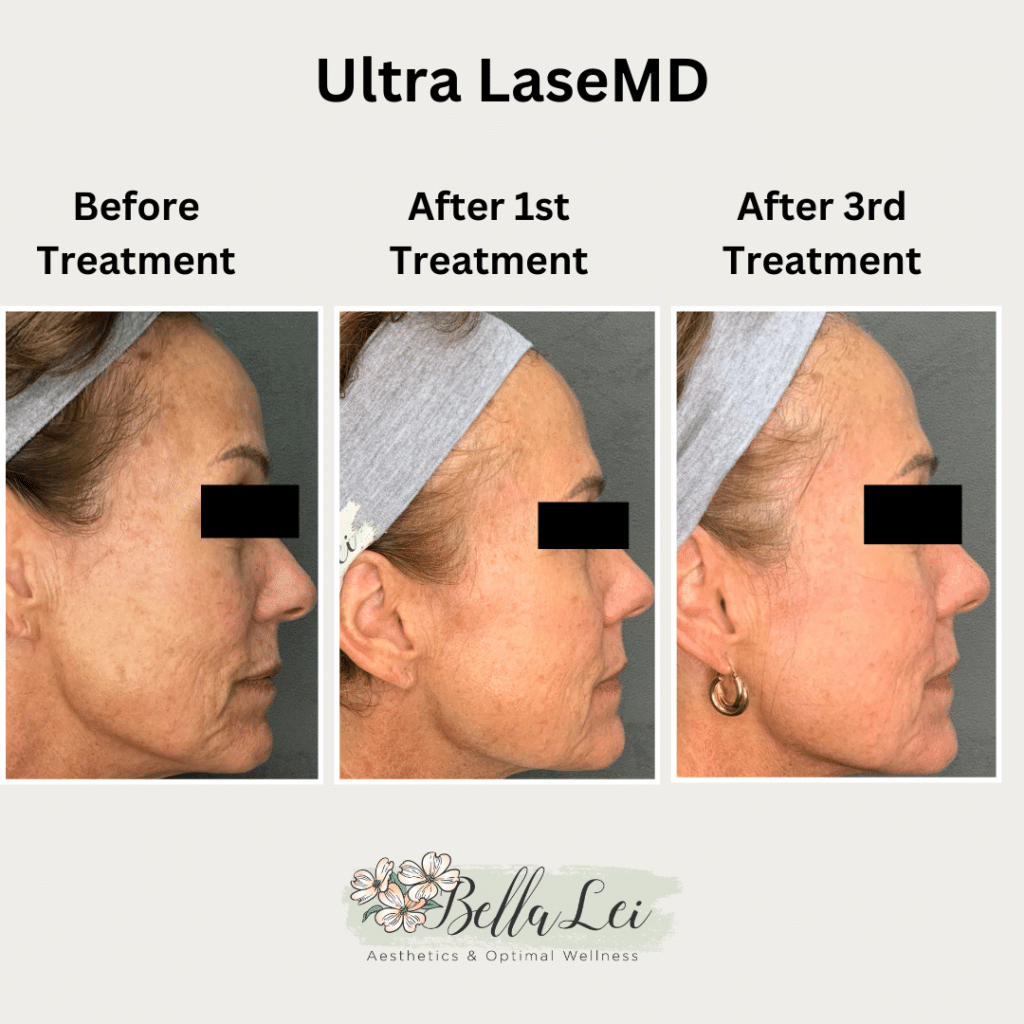
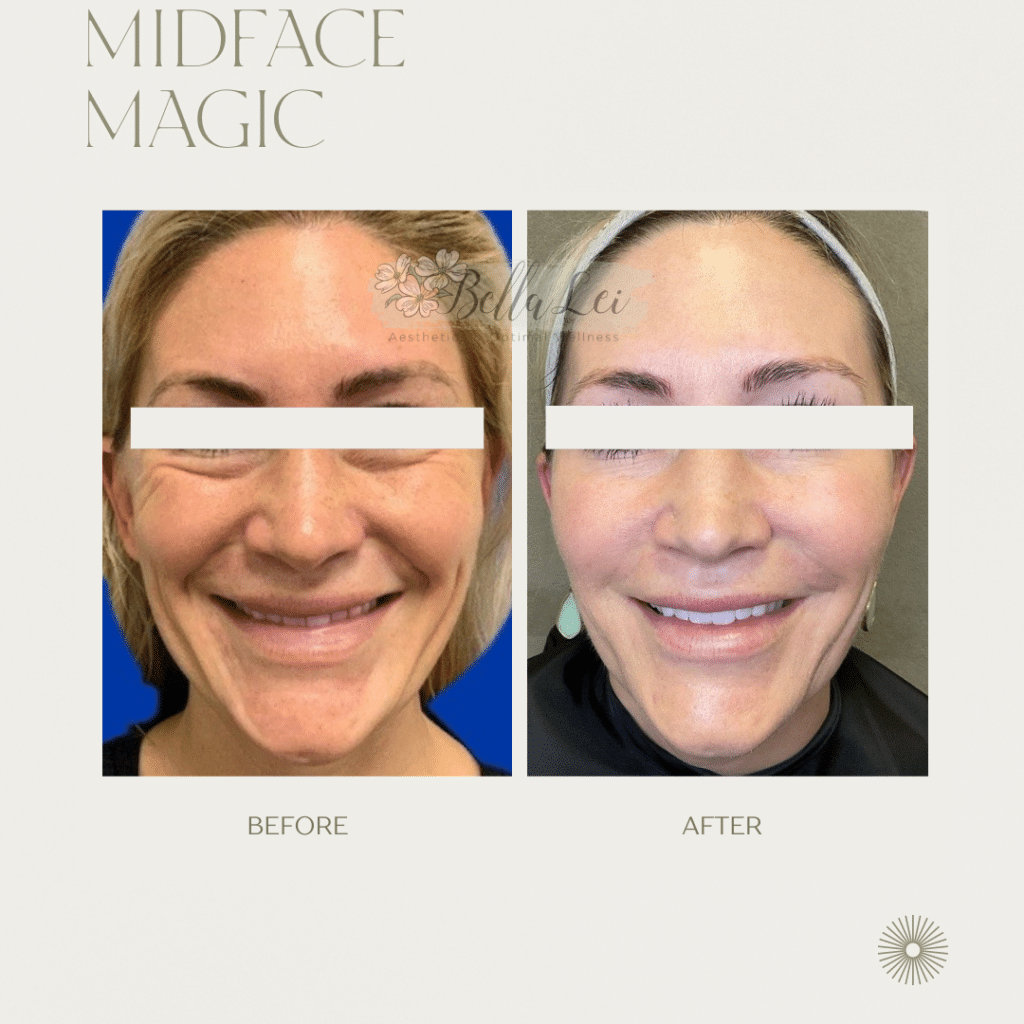
Choosing between laser treatments and aesthetic fillers depends on your skin concerns, desired results, budget, and how long you’re willing to wait for improvements. Here’s a detailed comparison to help you make an informed decision:
Laser Treatments are Best For
- Skin texture issues (e.g., roughness, uneven skin tone).
- Fine lines and wrinkles across larger areas (e.g., forehead, cheeks).
- Sun damage, pigmentation, age spots, or melasma.
- Acne scars or other forms of scarring.
- Skin tightening and rejuvenation (collagen stimulation).
Lasers use concentrated light energy to target skin layers, stimulating collagen production, resurfacing skin, or reducing pigmentation.
Aesthetic Fillers are Best For:
- Restoring lost volume in the face (e.g., cheeks, under the eyes, lips).
- Smoothing deeper wrinkles, folds, and lines (e.g., nasolabial folds).
- Enhancing facial contours (e.g., jawline, cheekbones).
- Treating localized areas like tear troughs, lips, and around the mouth.
Fillers (typically made from hyaluronic acid or other substances) add volume beneath the skin to fill in wrinkles, lift sagging areas, and enhance facial features.
Timeframe to See Results
Skin tightening Laser treatments often require multiple sessions, with improvements becoming visible over several weeks to months as collagen production increases and the skin heals. Results can last from 1 to 5 years, depending on the type of laser and skin condition.
Fillers offer more instant improvements in volume and wrinkle reduction, with full effects visible within a few days after swelling subsides. Results last from 6 to 18 months, depending on the type of filler and the treated area. Some fillers, like Sculptra, can stimulate collagen and last longer (up to 2 years). There is minimal downtime, though you may experience mild swelling, bruising, or redness for a day or two.
Cost Considerations
Lasers typically have a higher upfront cost, typically ranging from $500 to $3,000, depending on the type of laser, areas treated, and number of sessions needed. Multiple sessions (3 to 5) are often recommended. However, after the initial sessions, you may only need maintenance treatments every 1 to 2 years, making it a cost-effective option for long-term skin improvement. Laser treatments provide longer-lasting results because they work by stimulating collagen production and improving skin quality overall. Maintenance treatments are less frequent.
Fillers typically cost between $500 to $1,000 per syringe, depending on the product and the amount needed. The total cost depends on how many syringes are required for the treatment area. Fillers offer temporary results as the body breaks down and metabolizes the filler material. Maintenance is required every 6 to 18 months to maintain the desired results. This can add up over the long term and wind up being a larger investment.
Customization of Treatment
Lasers can be adjusted for your skin type and condition. For example, non-ablative lasers target the skin’s deeper layers with less damage to the surface, while ablative lasers can provide more dramatic resurfacing results.
Different types of fillers (hyaluronic acid, calcium hydroxylapatite, poly-L-lactic acid) can be used for different purposes. Fillers allow for customized contouring and volume enhancement based on individual facial anatomy.
Which is Right for You?
Choose Laser Treatments If:
- You’re looking to improve overall skin texture, tone, and quality.
- You have concerns like fine lines, pigmentation, sun damage, or acne scars**.
- You’re looking for a more long-term solution with less frequent maintenance.
Choose Fillers Treatments If:
- You’re looking to restore lost volume, lift sagging skin, or smooth deeper lines and wrinkles (like nasolabial folds or under-eye hollows).
- You want instant results with minimal downtime.
- You have specific areas of concern, like the cheeks, lips, or jawline.
Combining Laser and Fillers
For complete comprehensive facial rejuvenation, some people opt for both treatments throughout the year. Lasers can improve skin quality and texture, while fillers address volume loss and deeper wrinkles. This combination provides more natural-looking, balanced, regenerative, and long-lasting results.